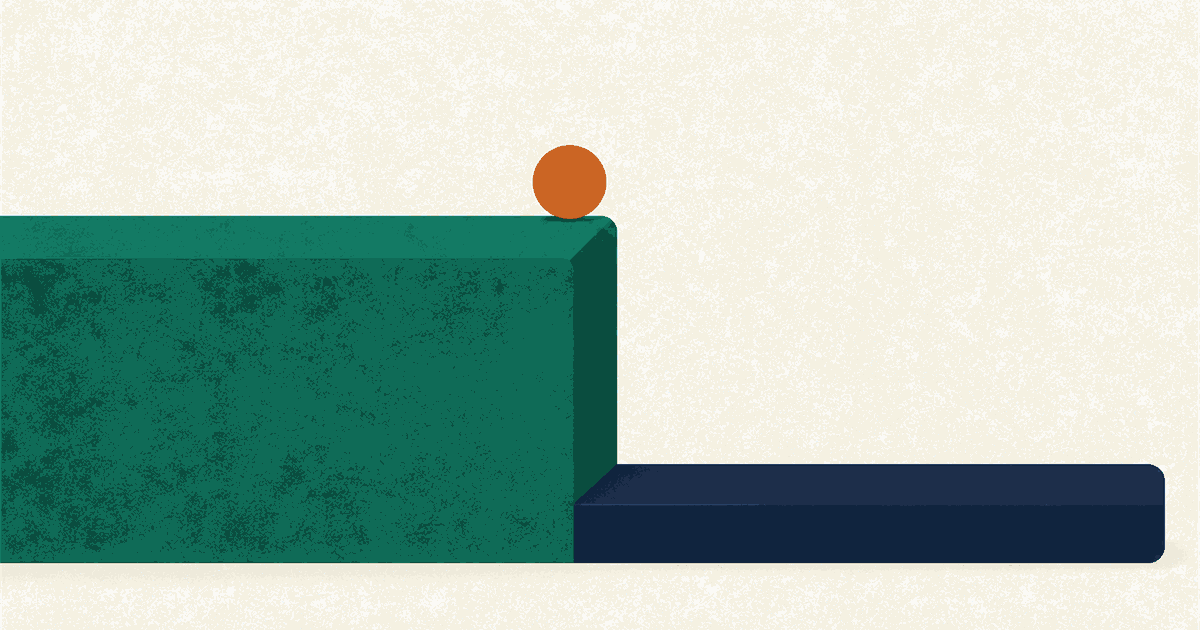
The subsidy cliff is the moment your premium tax credit drops sharply or disappears entirely because your income crossed a threshold. It used to be a hard wall at 400 percent of the federal poverty level. Recent law softened it, but whether the softer rule still applies depends on which year you are looking at, so this article is about the mechanics, not a specific dollar figure.
The two versions of the subsidy curve
Before the American Rescue Plan in 2021, the rule was simple and harsh. If your household MAGI was at or below 400 percent of FPL, you got a credit. If you went one dollar over, you got nothing. This was the original cliff.
The American Rescue Plan and the Inflation Reduction Act replaced the hard cliff with a smoother curve for the years they covered. Under that version, the credit phases out gradually as income rises. Even higher-income households can get some credit if their benchmark Silver premium exceeds a certain percentage of their income.
Whether the smoother rule is in effect for the current plan year depends on legislation. The extensions have come and gone. Always check HealthCare.gov for the current rule before you make an income decision based on the cliff.
Why the cliff matters so much
Under a hard cliff, the math is brutal.
A household earning just under 400 percent of FPL gets a credit. The credit can be thousands of dollars a year, sometimes ten thousand or more for older couples or families.
A household earning one dollar over loses the entire credit.
If the household took advance premium tax credits monthly and ended the year over the cliff, the IRS claws back the full amount on Form 8962. There is a repayment limit for filers under certain income, but above the cliff, the limit does not protect you. The repayment can swamp the tax return.
Even under the smoother curve, a sharp income change can still cost you meaningful subsidy dollars. The pain is just spread across a wider range.
What counts as income
The marketplace uses household MAGI: adjusted gross income plus three add-backs.
- Non-taxable Social Security benefits
- Tax-exempt interest
- Excluded foreign income
It is not gross pay. It is annual federal-tax income for your whole tax household, including dependents who have income requiring them to file.
How small choices can cross the threshold
The cliff catches people who do not realize a single decision pushes them over.
A year-end consulting check that lands December 28 instead of January 4. The choice of which year to report it can move you across.
A Roth IRA conversion. Conversions add to taxable income that year. A large conversion can blow through the cliff.
A capital gain. Selling appreciated stock or property generates a gain that counts.
A required minimum distribution from a retirement account. RMDs are ordinary income.
A spouse going from part-time to full-time mid-year. The annualized income jumps.
Lottery winnings, settlements, or one-time bonuses.
How to stay under, when staying under matters
If a real cliff is in effect and you are close, you have legitimate tools to manage MAGI.
Contribute more to a traditional 401(k) or traditional IRA. Reduces AGI.
Contribute to an HSA if you have an HSA-eligible plan. Reduces AGI. See HSA-compatible plans.
Use a self-employed retirement plan. Solo 401(k) or SEP-IRA contributions reduce self-employment income.
Defer income to next year if possible. Push a December invoice into January.
Take fewer Roth conversions in a year when you would otherwise cross the cliff.
Realize losses to offset gains. Tax-loss harvesting against capital gains.
What does not help: Roth IRA contributions do not reduce MAGI. Standard deductions do not reduce MAGI. Itemized deductions do not reduce MAGI directly.
If you are self-employed, the interaction is circular: the self-employed health insurance deduction reduces AGI, which changes the credit, which changes the deduction. The IRS publishes a worksheet for this. Most tax software handles it.
The reverse problem: misjudging downward
People also get hurt by under-estimating income. They take a large advance credit during the year, the income comes in higher than expected, and they repay at tax time.
The advance premium tax credit is reconciled on Form 8962 when you file. Update your marketplace estimate any time income changes. A five-minute update in October saves a painful surprise in April.
A worked example under a hard cliff
A household of two, both 55, expecting MAGI of roughly 395 percent of FPL.
They take the advance premium tax credit all year. The credit for older couples in the 50s can be substantial because age affects benchmark premium.
In December, a year-end bonus pushes MAGI to 401 percent of FPL. Under a hard cliff, the credit they took during the year becomes a repayment to the IRS.
If they had known in October, they could have deferred the bonus, contributed more to a traditional 401(k), or done a partial Roth conversion in a different year. By December it is usually too late.
The lesson: check your projected MAGI quarterly if you are anywhere near a threshold.
What to do next
Confirm whether a hard cliff or a smoother curve is in effect this year by looking at HealthCare.gov.
Estimate your annual MAGI realistically, including any expected one-time items.
If you might be near a threshold and a hard cliff applies, talk to a tax professional about levers that reduce MAGI.
Update the marketplace any time income changes meaningfully.
For more, see premium tax credit income and self-employed coverage.
Sources
Frequently asked questions
Is there still a subsidy cliff at 400 percent of the federal poverty level?
The American Rescue Plan and Inflation Reduction Act eliminated the hard cliff at 400 percent of FPL for the years they covered. Whether that extension is still in effect for the current plan year matters a lot. Check HealthCare.gov before assuming a cliff or its absence.
What income counts for the cliff?
Marketplace MAGI: your adjusted gross income plus non-taxable Social Security benefits, tax-exempt interest, and excluded foreign income. It is for your whole tax household.
What happens if I miss the cliff by a small amount?
Under a hard cliff, even one dollar over loses you the entire credit, which can mean a several-thousand-dollar repayment at tax time. Under a smooth phase-out, a small income increase costs only a small amount of credit.
Can I reduce my MAGI to stay under the cliff?
Possibly, depending on income type. Traditional IRA contributions, HSA contributions, and self-employed retirement contributions reduce MAGI. Roth conversions and capital gains generally do not.