
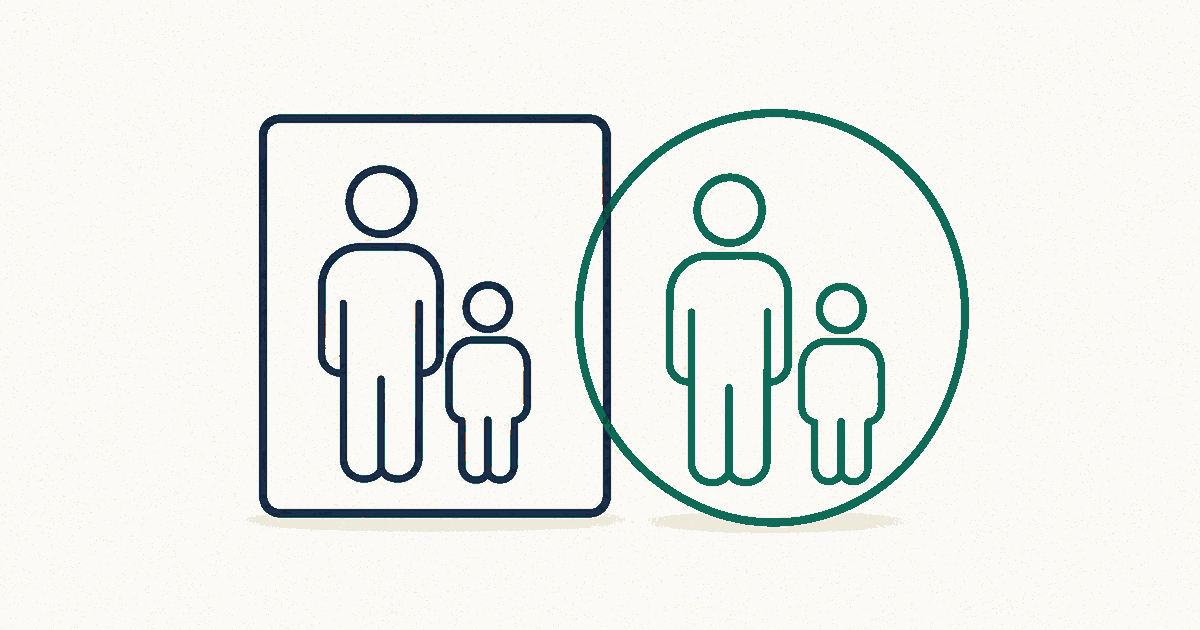
The marketplace and the IRS use the word "dependent" differently. This catches families every year, especially when adult children are aging off a parent plan or when split households share custody. Here is how the two definitions actually work and how to keep them straight.
Tax dependents: the IRS test
The IRS uses two paths to define a dependent. Most people only need one of them.
Qualifying child. A child (including stepchild, foster child, sibling, or a descendant of any of these) who is under 19, or under 24 if a full-time student, or any age if permanently disabled. The child must have lived with you more than half the year, not provided more than half their own support, and not be filing a joint return except in narrow cases.
Qualifying relative. Someone who is not your qualifying child, has gross income below the IRS threshold, received more than half their support from you, and either lived with you all year or is a relative on the IRS list (parents, siblings, in-laws, others).
Tax-dependent status is what lets you claim certain credits and deductions on your return. It is a federal-tax concept.
Health insurance dependents: a different set of rules
For health insurance, the rules depend on the type of coverage.
Parent health plan, age-26 rule. Under the ACA, a parent plan must allow a child to stay on the plan until age 26. The child does not have to be a tax dependent. They do not have to live with the parent, be in school, be unmarried, or be financially dependent. The only criterion is age. See our aging off a parent plan guide.
Employer family coverage. The plan defines who can be added as a dependent. Most plans cover a spouse and children up to age 26. Some plans cover domestic partners, registered or not. Stepchildren and adopted children are usually treated like biological children. The employer summary plan description controls.
Marketplace coverage. The marketplace asks about your tax household: the people whose income and household size matter for the premium tax credit. Your tax household is the tax filer, spouse if filing jointly, and tax dependents. The marketplace then asks which household members want coverage on this plan.
So the same young adult might be in two categories at once. They can be on a parent health plan (because of the age-26 rule) but file their own taxes and not be a tax dependent.
The most common mismatches
Adult child on parent health plan but filing own taxes. This is allowed and routine. The parent claims the parent on their return. The child claims themselves. The child is on the parent health plan because they are under 26. No tax credit on the parent return is affected, because no one is claiming the child as a tax dependent.
Divorced parents alternating tax dependents. Tax custody is often shared by IRS rules (one parent claims the child this year, the other next year). Health insurance, however, often stays with one parent through a divorce decree. The child can be on the non-claiming parent health plan and still be the other parent tax dependent in a given year. Both situations can be correct.
Mixed household with a non-tax-dependent partner. An unmarried partner you live with might not be a tax dependent (most are not, because of the joint-return rule and the income threshold). They are also generally not eligible to be added as a dependent to your health plan, unless the plan recognizes domestic partners.
Multi-generational household. A parent claiming an elderly parent as a qualifying relative on taxes does not automatically extend health insurance to that elderly parent. Medicare and the marketplace handle the elderly parent separately.
Why this matters for marketplace subsidies
The premium tax credit calculation uses the tax household. Specifically:
- Household size is the tax filer, spouse, and tax dependents.
- Household MAGI is the combined modified adjusted gross income for everyone in the household, including a tax dependent who has income that requires them to file.
If you list the wrong household on the marketplace, the subsidy will be wrong. If you take the wrong subsidy during the year, you reconcile on Form 8962 at tax time and either repay or get a refund.
Two common errors:
Including a non-tax-dependent on the marketplace household. For example, listing an adult child who files their own return as a dependent on the marketplace application. The application then expects to see them on your Form 8962, and the IRS will flag the mismatch.
Excluding a tax-dependent from the household. For example, leaving an elderly parent off the marketplace application because they have separate Medicare. If they are your tax dependent, they count in household size, which can increase your credit.
Practical rules of thumb
A young adult on a parent health plan is not automatically a tax dependent. Decide tax status separately based on the IRS tests.
A tax dependent is generally part of your marketplace household, even if they have their own coverage elsewhere.
When in doubt, use the IRS Interactive Tax Assistant tool and the HealthCare.gov household guide. Both walk you through with specific questions.
Document changes mid-year. A baby, a marriage, a divorce, or an adult child becoming independent all change both lists. Update the marketplace within 30 days when household changes.
What to do next
If you are filing taxes, work out the dependent question first using the IRS test.
If you are on a marketplace plan, confirm your household on HealthCare.gov matches your expected tax return.
If you are about to age off a parent plan, do not assume your tax situation changes too. They are separate decisions.
For more, see aging off a parent plan at 26, premium tax credit income, and Special Enrollment Period qualifying life events.
Sources
Frequently asked questions
Who counts as a tax dependent?
The IRS uses two tests, qualifying child and qualifying relative, each with specific age, relationship, residency, support, and income criteria. The full rules are in IRS Publication 501.
Who counts as a dependent on health insurance?
For marketplace purposes, your tax household generally drives the answer: the tax filer, spouse, and tax dependents. For a parent health plan, children up to age 26 can be enrolled regardless of tax-dependent status.
Can a young adult be on a parent health plan but not a tax dependent?
Yes. The age-26 rule for health insurance does not require tax-dependent status. A 24-year-old with their own job, filing their own taxes, can still be on a parent plan.
Why does this matter for marketplace subsidies?
Premium tax credits are calculated on the tax household and household MAGI. If you misstate who is in your household, you can get the wrong credit and owe money at tax time.